Please Try to Understand Clinical Depression

73

By Victoria Lynn

Source: mogueFile

Understanding Depression

Get over it! Snap out of it! What’s your problem? These phrases of “encouragement” are far from helpful in helping someone who is suffering from depression to “get over it.”

I am continually amazed when people have this attitude, this ignorance about what depression really is. Maybe that’s because I know what it feels like to not be able to “get over it.” Understanding the difference between some temporary depressive state and clinical depression is important. "Normal" folks might feel sad or "depressed" for a few days or even a few weeks, but it does pass as life circumstances improve. Those who are clincially depressed, however, struggle with feelings of sadness--and often hopelessness--even when their lives are going along just fine on the outside.

I remember as a child feeling different from the other kids; I felt distant and alone at times. I remember sitting in my fifth grade classroom writing poetry in notebooks while my friends played games in the back of the room. I've always felt melancholy, no matter how great my life was going. It took my happy, optimistic mom a long time to realize that I couldn't just "snap out of it" because it was my genetic makeup. Even now she has trouble wrapping her brain around the fact that people can't make themselves more positive by just thinking that way. But she did tell me recently that we should just "do the best with what we have to work with." (Love you, Mom!) For some of us, it's a daily struggle to attempt to make positive steps to feel better or sometimes to just get through the day. Baby steps, baby steps. That's what I tell myself.

Try as I might, I am never able to “snap out of it.” I'm not saying that I'm clinically depressed (at least not diagnosed), but I have had a strong bent toward melancholy since I was a young girl. And maybe my “problem” is a brain deficiency that I was born with. So please don’t tell me just to “get over it.” Would you tell a schizophrenic to stop having hallucinations or someone who is bipolar to just quit having those darn mood swings? Would you tell a diabetic to stop having incidences of low blood sugar or someone with heart issues to stop having them?

A Dark Video About Depression and Other Disorders

Happiness is NOT always a choice.

I'm not denying that individuals who are depressed can do things to make themselves feel better. Some of the advice that I hear: think positive thoughts; surround yourself with friends or family; get plenty of sleep; eat right; exercise. My response? Yes, these are all great tips, but for the depressed person, telling them to choose to be happy is like telling them to decide to grow another four inches taller.Thinking positive thoughts for the depressed person takes practice--and time. And exercise? While exercise is credited with producing endorphins that make a person feel better, the deeply depressed person sometimes can’t even get out of bed, much less go for a workout at the gym, or even take a walk around the block.

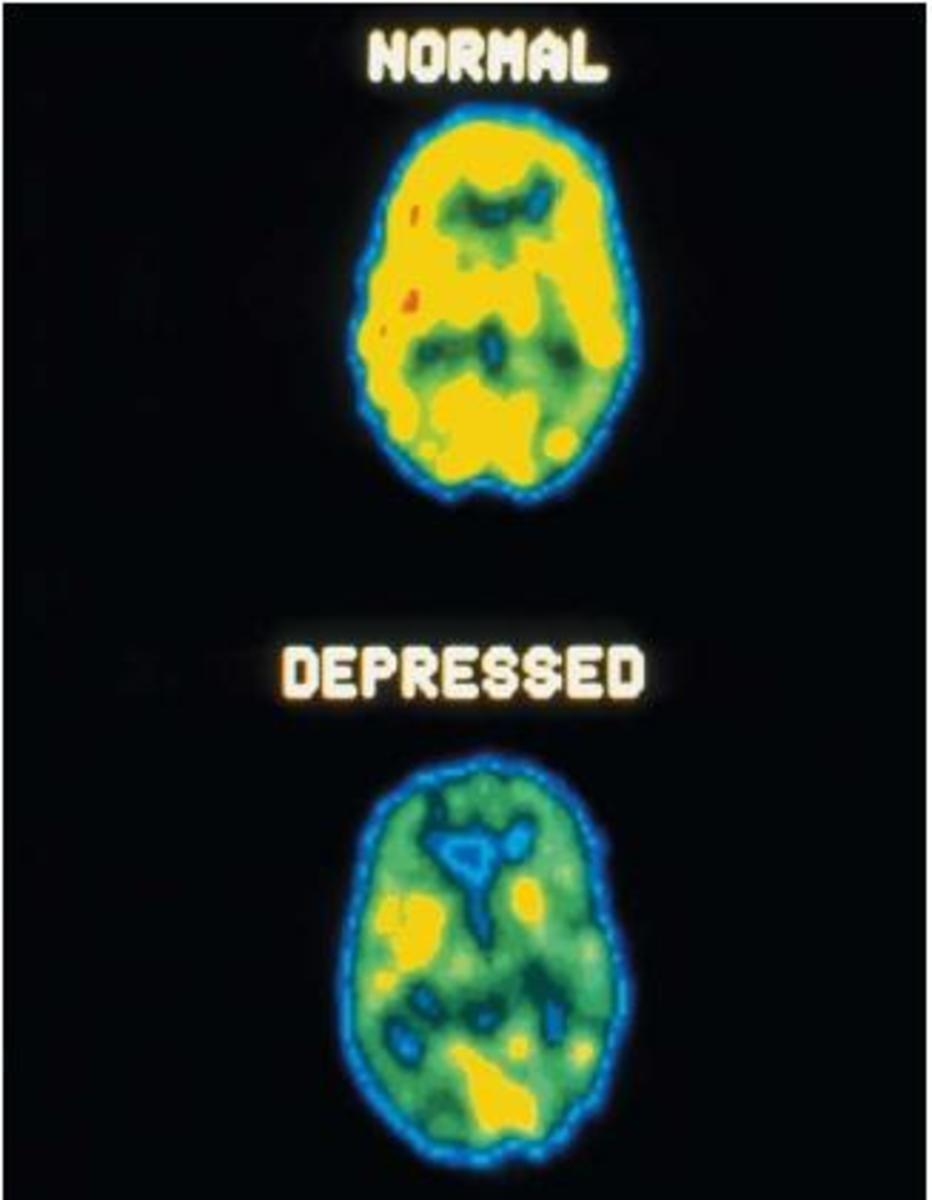
For those who don't understand clinical depression, think of it as an illness or condition, like any other--because it is. Do we tell people with high blood pressure to get over it and "choose" to have good blood pressure? NO, we don’t. Because it is a medical condition, just like depression. Both can and should be treated, but that does not mean they can be cured. Both can be treated in similar ways—with medication, exercise, but people suffering from either need time to find what works to treat their symptoms and help them to feel better. It may take many tries to find a medication that works to make the chemically-challenged brain feel better. It may take repeat attempts for the continually depressed person to find ways to feel better, to make gradual changes to be able to better cope with the daily sadness that persists inside.

People have good intentions, and it is good to try to take small steps in making oneself feel better. I know that. But, still, we must keep in mind that many people are clinically depressed. It is not a weakness or something easily changed. Depression is a natural occurrence in life, as many events are unplanned and traumatic in this life. For those who are “normal,” when the situation betters itself, the depression passes. For the truly depressed person, that feeling of sadness persists and must be continually dealt with.

Taking "Baby Steps" to Help Depression

So what is one to do who feels continually sad, down, and "depressed." Here are some things that I can recommend through personal experience, things that I have tried or am still attempting. While not all of these may work for any given individual, they are suggestions that might. My recommendation is to do the best you can with what you have, and, hopefully, you will have people around you who understand that, while you are trying, it isn't easy.

  • Talk to your doctor. Consider trying an anti-depressant. Unfortunately, I haven't found anything that has worked, but I haven't tried many. I prefer to go without the medications, anyway, so I'm trying other smaller steps to make myself feel better.
  • Consider counseling. At least find a confidante. I have several close friends in my life that I can confide in about feelings or simply vent to about daily pressures and frustrations.
  • Try to exercise, even if it's only for ten minutes. My doctor tells me that even ten minutes can help a person. I've been trying to use my dog to make myself feel guilty enough to get up and take him for a walk. He loves taking walks, and it makes me feel happy for him and better about myself for getting some exercise.
  • Try to eat right. I love food, so I have no problem with this one. My biggest problem in this area is eating too much when my mood is really down. Some people have the opposite problem--no appetite when they're depressed. Just keep trying. If I overdo it (eating) one day, I know that there is still tomorrow to make a fresh start.
  • Get enough rest. This really does seem to make a difference. I'm trying to set a regular bedtime, a difficult task since I've always been a night owl.
  • Find a pastime you're passionate about. I've piddled around with a lot of different things, but lately I have re-discovered my passion for writing and often throw myself into it for hours. Even if you're not a writer, you might find it therapeutic to start keeping track of how you feel in a journal. If you can't make yourself do that, keep dabbling in something until you find something you can lose yourself in.
  • Try, try, try to replace your negative thoughts with positive ones. I repeat "try" three times because I personally know how hard it is to do when our brains are not wired that way. Tell yourself something positive, even it it's as simple as, "I will feel better, I will feel better, I will feel better."

Above all, I try not to beat myself up. When I don't meet my goals, when I don't respond to life's disappointments as I think I should, when I respond negatively to stress, I tell myself that tomorrow is another day. I remind myself that I have a lot of positive personal qualities and some really good things in my life, and that we all have conditions or burdens we must live with. I also remind myself to take baby steps, as Bill Murray did in the movie, "What About Bob?" Baby steps, baby steps. One day at a time.

Movie: What About Bob? "Baby Steps"

Comments

Cutters profile image

Cutters Level 3 Commenter 7 months ago

This is great! I have this condition and on meds and sometimes if you read my poems I have my good days and my bad. Thanks for the advice. Sharing is caring.

Victoria Lynn profile image

Victoria Lynn Hub Author 7 months ago

I just read your "random poems," Cutters, and can relate somewhat. I just left a comment on those particular poems. I, too, have good and bad days, and sometimes I struggle. Baby steps, baby steps--that's what we have to try!

Cutters profile image

Cutters Level 3 Commenter 7 months ago

I will try and thank you for checking those out!

Kathleen Cochran profile image

Kathleen Cochran Level 6 Commenter 7 months ago

My sister has dealt with clinical depression since her teens. About seven years ago she tried yet another medication - and this one worked! She has literally gotten her life back. There are so many more options than there were 30 years ago. Don't give up until you find what works for you. If you had diabetes, you'd take the medicine. How is this different? Best of luck!

Victoria Lynn profile image

Victoria Lynn Hub Author 7 months ago

You bet, Cutters!

Kathleen, that's great! You are so right about keeping on trying....Thanks for the comments!

Dday50627 profile image

Dday50627 Level 4 Commenter 7 months ago

Victoria, I read your words and they are like echo's inside my soul. The phrases and the "Yes, I do understand's" that we get from loved ones are to the heart, sad ways that allow them to step away but not feel like they simply walked. There are so many things that could be said or not said that might give people like you and I a chance to breathe without the wonderment of what will be said to us next.

Unless you have the clinical depression, the bipolar, tourettes, there is no way to truly understand it. Hell, I am one of them and even I do not always understand it. You have writtien an "Up close and personal" hub that covers so much and speaks with such volume. It is both for those that are effected inside and those that love us and care for our hearts.

Sadly, but in truth... Meds are not always an option for some of us. Just take a pill??? Hmmm? Well truthfully, to some of us, those pills are like acid and so we strive daily to maintain and live as normal a life as we can. Again in following your words,it is so very easy for others to give advice or tell us how to "fix" it. Most that do give that advice would find it difficult and frightening to live in our world for a day, let alone a life time.

Thank you for your write here and know that it is wonderfully written and truthfully said. Don't ever stop... Always, Darrel

drbj profile image

drbj Level 8 Commenter 7 months ago

This is very well written, Victoria, and should be extremely helpful for those who suffer from depression and/or want to understand it.

You mentioned: "Tell yourself something positive, even it it's as simple as, 'I will feel better, I will feel better, I will feel better.'"

That is good advice. Self-talk, a form of self-hypnosis, can be very effective. I would make one small suggestion. Use these words instead: "I am feeling better, I am feeling better, I am feeling better."

Happyboomernurse profile image

Happyboomernurse Level 8 Commenter 7 months ago

Thanks for sharing your personal experience with depression and reminding those who do not suffer from it that clinical depression is much different from feeling temporary sadness related to specific events.

I also like the fact that you included some helpful recommendations in this hub but made a point of saying they are not helpful for everyone.

My Mom suffers from bipolar and at some periods of her life has been suicidal and gone years where she could not function other than to eat, sleep and retreat to her bed. She is 81 now and still needs ongoing adjustments of medications and occasional hospitalizations for her mental health issues. The hardest thing about watching someone that you deeply love suffer from the debilitating effects of depression is accepting the fact that your love for them is not enough to raise the heavy burden of their depression.

The next hardest thing about being emotionally bonded with a family member who is severely depressed is learning how to live your own life with joy. I eventually reached the conclusion that I could choose happiness for myself and am grateful that Mom has loved me enough to want me to choose happiness for myself.

Thanks for sharing your experience. And welcome to Hub Pages. I am glad that you are finding writing therapeutic.

melbel profile image

melbel Level 5 Commenter 7 months ago

Fantastic hub that speaks volumes for me. I've always been told to "snap out of it" growing up and it's something I haven't been able to pull myself out of. I suffer from PTSD in particular, and have been told that it's my choice to suffer from depression. I can see how it is and how it isn't.

On top of this, I am an INFP (personality type) so I'm very introverted. Living in a family of extroverts, they feel my introversion is a bad thing and that it's someone's "fault". It's definitely difficult to walk the line of sharing things with them and dealing with familiar publicity and holding it all in.

Therapy, ftw! :P

melbel profile image

melbel Level 5 Commenter 7 months ago

Fantastic hub that speaks volumes for me. I've always been told to "snap out of it" growing up and it's something I haven't been able to pull myself out of. I suffer from PTSD in particular, and have been told that it's my choice to suffer from depression. I can see how it is and how it isn't.

On top of this, I am an INFP (personality type) so I'm very introverted. Living in a family of extroverts, they feel my introversion is a bad thing and that it's someone's "fault". It's definitely difficult to walk the line of sharing things with them and dealing with familiar publicity and holding it all in.

Therapy, ftw! :P

Brenda Durham profile image

Brenda Durham Level 5 Commenter 7 months ago

Victoria, this is a beautiful hub. Voted Up and useful and beautiful.

You've just described someone near and dear to me who's going through this. I wish and pray for good things to come for both of you and all people who suffer from clinical depression. I know just a little about it personally; went through episodes of it, but was always able to bounce back. Well, not actually bounce back, more like slowly pull back up.

Blessings.

Kathleen Cochran profile image

Kathleen Cochran Level 6 Commenter 7 months ago

Happyboomernurse: It is hard to choose happiness for yourself when a loved one is suffering. How beautifully written.

Victoria Lynn profile image

Victoria Lynn Hub Author 7 months ago

Thanks, Darrel. While my issues are not as severe as others, I do know what it's like to feel down every day. And people often don't understand. You're right in that meds don't always work. We each have to find a way to deal with our own daily lives. If this article can help anyone, than I'm glad I wrote it. Heck, it was therapeutic to me just to write it! Thanks so much.

Victoria Lynn profile image

Victoria Lynn Hub Author 7 months ago

drbj--Good advice re: the wording. I may have to revise with that: "I am feeling better, I am feeling better."

Happyboomernurse--I'm glad you could see the helpful aspect of the hub for those suffering from depression (and related disorders) as well as those who need to understand and offer support. That must be difficult with your mom, but I am glad that you were able to embrace your own happiness and that your mother was also able to support YOU in that as you have supported her. I really, really appreciate your comments.

melbel--I don't think that depression is a choice for most people. Perhaps it's a choice not to even try to feel better, to take some kind of steps. It's difficult to say, because I can't walk in someone else's shoes. It's interesting about your INFP; I think I'm also that, or maybe an INJP. My personality type is very close to yours, then. I think it's great to be an introvert. We're reflective, intuitive, and are generally creative. It's great to be us, I think! Extroverts are great in their way; introverts are great in theirs. You should not feel that something is wrong with you in that way. By the way, what is "therapy ftw!"

Victoria Lynn profile image

Victoria Lynn Hub Author 7 months ago

Brenda--"pulling slowly back up." I like that phrase. That is often true of the way I feel, but I don't stay very high for very long. I am able to plug on through most of the time, so I'm grateful for that. I thank you so much for your comments!

Kathleen--it is hard to be happy when others are suffering, but it's good when people can, I believe. Thanks for reading and commenting!

fpherj48 profile image

fpherj48 Level 8 Commenter 7 months ago

Victoria...so well-written and beautifully presented. This is a vital message for so many and especially close to my heart. Thank you. Up & awesome

Vinaya Ghimire profile image

Vinaya Ghimire Level 8 Commenter 7 months ago

My father did not know he was suffering from clinical depression until he read an article by a doctor. For ten years he was on medication. One day he was suggested to practice meditation, of course by his doctor. After meditating for couple of years he suddenly discovered his head did not burst when he did not take drugs.

Seeker7 profile image

Seeker7 Level 8 Commenter 7 months ago

This hub is wonderful!!

As a nurse who has looked after people with depression and also having suffered from it myself, this article speaks volumes!!

The only people I know of who state 'it's not an illness' or 'snap out of it' are people who have never had to suffer the debilitating affects of this condition. We hear time and time again, "What's the problem, everyone feels down from time to time"? But those temporary low feelings - we all have - are entirely different to the feelings and outlook of true depression.

Temporary lows are like disruptive waves in thinking and emotion. When it's depression it's like a silent, black, engulfing storm - cold and deep. Your whole being is affected.

This hub was excellent and it will help so many others both to be understood and to understand. Voted up + awesome.

Victoria Lynn profile image

Victoria Lynn Hub Author 7 months ago

fpherj48--You're welcome...and I love your comments!

Vinaya--I always appreciate your comments!

Thanks, Seeker7. I want this article to help those who suffer and those who are around those are suffer. You are absolutely correct--no one realizes the pain and hopelessness of true depression unless they are in it. I appreciate your comments so much.

sweetoneangel profile image

sweetoneangel Level 1 Commenter 7 months ago

Very great hub, and very useful. The Doctors think that my daughter might have clinical depression, and suggested that I might be as well. Glad I found your hub.

Victoria Lynn profile image

Victoria Lynn Hub Author 7 months ago

I'm glad you found this hub, too, sweetoneangel, if it helps you and your daughter. Anything that helps is good; just don't give up. :-)

Cutters profile image

Cutters Level 3 Commenter 7 months ago

I am trying not to give in I wrote a hub about my addiction to my meds. It is not a good one. But I am going to turn things around and fix my life so I can work on being happy. I am going to try from now on to write happy hubs with a few weird creepy hubs!

Victoria Lynn profile image

Victoria Lynn Hub Author 7 months ago

Iknow it's hard, Cutters. Try to fight it as best you can. Happy, weird, and creepy hubs. All welcome here! :-)

qlcoach profile image

qlcoach Level 4 Commenter 7 months ago

Excellent work here! Yes, clinical depression is all about a chemical imbalances in the brain. The best form of treatment includes a combination of medications and therapy. Since I'm a retired social worker, I can relate to your struggles. I've also learned a process of healing and treatment that helped me, my wife who suffered from BiPolar Disorder, and many of my dual-diagnosed and addicted clients. We can learn to vent the pain and the suffering. This frees the mind to use positive thoughts, actions, and beliefs to fly and soar above all that is negative. Sending you golden Light...Gary.

Victoria Lynn profile image

Victoria Lynn Hub Author 7 months ago

qlcoach--how does one "vent the pain and the suffering"? Do you have a hub about that? I'll have to look. Thank you for theh compliment and for sending me "golden Light." I can use it!

Just Ask Susan profile image

Just Ask Susan Level 8 Commenter 7 months ago

I wrote a poem about depression. Your hub is 100% true and I hope that people that do not understand depression read this as well as people that think they may need to seek help.

Victoria Lynn profile image

Victoria Lynn Hub Author 7 months ago

Thanks, Just Ask Susan. Yes, both need to understand. It's a really misunderstood condition. I'd like to read your poem!

justateacher profile image

justateacher Level 7 Commenter 3 months ago

My favorite way to deal with my depression is writing and listening to good music...and you are right..if you haven't experienced depression first hand it is hard to know how horrible it can be...great hub! Thanks for Sharing!

kschimmel profile image

kschimmel Level 6 Commenter 3 months ago

I was one who didn't believe depression was a real illness--until I got slammed in the face with it during my last 2 pregnancies. I used medication for a year or two, but had to go off because of some side effects (impulsiveness, running up credit cards, NOT my usual self.) I found lasting relief through EMDR therapy, a non-drug treatment.

I grab every opportunity to share my experience in case it helps somebody else. Everyone with depression thinks they are alone, but they are not. I'm glad you also share your experience--I'm sure it has helped some people.

Victoria Lynn profile image

Victoria Lynn Hub Author 3 months ago

justateacher--Sometimes writing is the only thing I can do when I'm depressed. It DOES help sometimes. Thanks for reading and commenting!

vrbmft profile image

vrbmft Level 3 Commenter 3 months ago

Hi Victoria Lynn

Great hub with lots of insights for those who can't help themselves tell others to move on!

I think depression is very very real. I think the distinction between clinical depression (being a chemical imbalance) and so-called normal depression is a bit of a misnomer and for someone who is depressed a set up because no one wants to fall into that other category.

And as far as the chemical imbalance goes, everything we do, think, and feel, brings about a new balance or an imbalance in our brain. Homeostasis with regard to brain activity and neurotransmitters is a little iffy in my book.

What I think no one will argue with is that depression is an absolute must as a physiological (not psychological) response to LOSS. And we are all well trained to minimize and deny our losses.

The amygdala, which processes emotional experiences, including loss, is on line and working well at seven months in the womb. Losses are part and parcel of every day life and at times insidious because there are so many experiences that become expected and par for the course that we stop identifying them as losses, but they are, nevertheless, a loss.

The first three to six years of life are so critical with respect to loss, that I don't imagine any of us reach age six without an abundance of losses, but everything else around us looks good, and certainly no one is identifying the losses for us, it's just life, and maybe it is, but still one loss after another. When the losses are not grieved, they stay unconsciously "stuck" in the amygdala, waiting to fire off at any current experience that even remotely reminds the brain of the initial loss or losses.

For me, depression is about ungrieved grief or ungrieved loss.

Anywho Thanks for a great hub and for supporting so many folks who struggle to grieve without support.

Vern

Victoria Lynn profile image

Victoria Lynn Hub Author 3 months ago

kschimmel--Thank you, too, for sharing your experiences with depression. I have never heard of EMDR therapy. I might look at that. Sounds interesting. Thanks for the comments.

vrbmft profile image

vrbmft Level 3 Commenter 3 months ago

Hi again Victoria and Kschimmel

EMDR is a procedure, seems sort of hokey at first, that assists the right and left hemispheres of the brain to integrate intense emotional experiences so the experience can be stored in long term conscious memory (hippocampus) and not stuck in the amygdala. We have no conscious access to the emotions stored in the amygdala. It's basically what our brain does on its own during dreaming and the integration of loss into both left and right hemispheres is neurologically what grieving is all about. Try EMDR. There are several simple methods. Google it and I'm sure you will find a detailed description of the actual procedures. Try it, you will like it. Pretty benign, but powerful.

Vern

Victoria Lynn profile image

Victoria Lynn Hub Author 3 months ago

Interesting, Vern. For some people, ungrieved loss is probably the source. But, for some of us, a feeling of depression exists whether or not grief exists. True depression is always there beneath the surface, even when the person is temporarily happy, and must be fought away at all times. At least, that is my experience. I appreciate your comments. I think that there are many causes for the different types of depression.

Victoria Lynn profile image

Victoria Lynn Hub Author 3 months ago

Interesting about EMDR. I'll have to look into that sometime. Thanks for the information, vrbmft!

Submit a Comment
Members and Guests

Sign in or sign up and post using a hubpages account.


    • No HTML is allowed in comments, but URLs will be hyperlinked
    • Comments are not for promoting your Hubs or other sites

    Please wait working